


 25.09.2025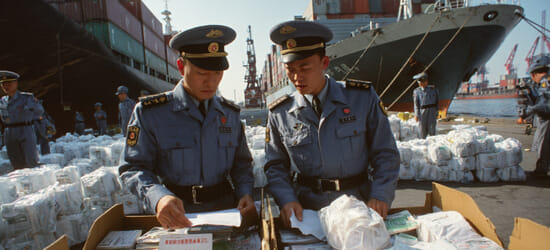





Customs clearance in China is the formal gateway every shipment must pass before it can circulate legally inside the country. The process covers product declaration, document verification, and the payment of all required duties and fees. China sits at the core of global trade flows, so dealing with customs here isn’t an edge case — it’s standard reality for nearly every business involved in import or export. Understanding how Chinese customs clearance actually works helps companies avoid delays, cut operational risk, speed up logistics, and protect margins from quiet but expensive mistakes.
This article walks through how customs clearance in China unfolds step by step, which documents are expected, and what types of customs duties importers should be ready to face when goods cross the border.
Customs in China, Explained: decoding how the gatekeepers of trade really work
China stands among the world’s economic heavyweights and plays in the top league of global trade. Naturally, its customs system sits at the center of how foreign economic activity is controlled. This machinery isn’t decorative — it’s the state’s main tool for keeping cross-border operations lawful and the domestic market protected. Officially, China’s customs authority is known as the General Administration of Customs of the People’s Republic of China. Its role goes far beyond stamping papers: from controlling goods at the border to compiling the country’s foreign trade statistics. Below are the core functions every entrepreneur should understand before moving goods in or out of China.
Control over lawful import and export
One of customs’ primary jobs is verifying that goods comply with current regulations and standards. This isn’t limited to paperwork. Physical inspections of shipments entering or leaving China are routine. Any product that fails to meet requirements can be detained or outright banned from import or export. Cutting corners here usually ends with delays and losses.
Collection of customs duties
Chinese customs also acts as the financial gatekeeper of foreign trade. It administers and collects duties and taxes when goods cross the border. Duty rates depend on product category, declared value, volume, and country of origin. On top of customs duties, additional charges may apply — most commonly VAT or consumption taxes, depending on the nature of the goods.
Safety and consumer protection
Another critical task is protecting the domestic market from unsafe products. This applies to industrial goods, foodstuffs, pharmaceuticals, and other sensitive categories. Any item that fails safety standards can be seized. That’s why document preparation isn’t bureaucracy for its own sake — it’s often the difference between release and confiscation.
Foreign trade statistics
Customs authorities collect detailed data on foreign trade flows. These figures help the state track market trends, adjust economic policy, and maintain a balance between imports and exports. For businesses, this data becomes a valuable signal — highlighting in-demand goods, supply routes, and emerging market patterns.
Customs clearance of goods in China
One defining feature of Chinese customs is its strict attitude toward documentation. Even minor discrepancies in declarations can trigger shipment delays, fines, or bans on import or export. To pass customs smoothly, businesses need to:
- determine the exact classification of goods in advance;
- prepare accurate invoices, certificates of origin, and required licenses;
- comply with current packaging and labeling rules;
- factor in applicable customs duties and tax rates.
In China, customs clearance isn’t a formality. It’s a system that rewards precision — and punishes assumptions.
How Goods Enter China: A Practical Map Through Customs Control
For businesses working with international supply chains, customs clearance in China is a routine necessity — but rarely a simple one. The process often raises questions, particularly for newcomers to the Chinese customs system. Clearing goods through China involves a structured set of legal and administrative steps designed to regulate what enters the country and under what conditions. Knowing how this process unfolds helps businesses avoid delays, unexpected costs, and regulatory friction.
In this guide, we break down the core stages of customs clearance in China and focus on the specific aspects that matter when moving goods across the Chinese border.
Customs Clearance in China Starts on Paper: preparing documents that let cargo move
The first — and most decisive — stage of customs clearance in China is document preparation. How smoothly goods pass customs depends directly on how accurate, complete, and consistent the paperwork is. Sloppy documents don’t just slow things down; they invite inspections, delays, and sometimes outright refusal.
The commercial invoice is the core document confirming the value of the transaction and the terms agreed between seller and buyer. It normally states:
- the name of the goods and their quantity;
- the price per unit and the total shipment value;
- delivery terms under Incoterms, defining responsibility for transport, insurance, and risk allocation.
A correctly drafted invoice allows customs to calculate duties and taxes properly and significantly speeds up cargo processing.
The packing list provides a detailed breakdown of how the goods are packed and in what quantities. It’s essential for physical inspections and helps customs officers identify the cargo without opening every package. The document usually includes:
- the weight of each box or pallet;
- package dimensions;
- the number of items in each package.
For large consignments, the packing list becomes a practical tool not only for customs declaration in China but also for warehouse planning and logistics coordination.
The contract formalizes the transaction between seller and buyer. It confirms the legality of the deal and serves as a reference point for assessing the declared value of goods. A well-prepared contract should clearly state:
- full legal details of both parties;
- product description and technical specifications;
- payment terms and delivery timelines.
For Chinese customs, the presence of a contract reduces suspicion of undervaluation or illegal import schemes.
Documentary requirements for customs clearance in China also vary depending on the mode of transport:
- Sea freight — Bill of Lading, which confirms receipt of the cargo by the carrier, specifies the port of loading and discharge, and acts as a document of title.
- Air freight — Air Waybill, which is non-negotiable and does not confirm ownership, but records the carriage contract between shipper and airline. It includes details of the sender, consignee, route, weight, volume, and cargo type.
- Rail transport — Rail Waybill, confirming acceptance of goods by the rail operator and the terms of delivery. For international routes such as China–Europe, a unified CIM/SMGS waybill is used.
- Road transport — CMR consignment note, issued under the Convention on the Contract for the International Carriage of Goods by Road. It confirms the transport agreement and documents delivery terms and cargo characteristics.
These documents prove the fact of transportation and form the legal basis for presenting goods to customs control.
Certain categories of goods also require additional supporting documents, including:
- food products and beverages;
- electronics and household appliances;
- textiles and footwear.
Quality and origin certificates confirm compliance with national and international standards and help prevent refusal of cargo release at Chinese customs.
Declaring Cargo in China: where data opens the gate
Once the shipment physically arrives in China, the next move is customs declaration. At this stage, customs clearance and cargo movement in and out of China run through a fully digital workflow powered by the e-Customs system. Declarations are no longer paper rituals — they’re structured data submissions. The declaration includes:
- HS Codes, used to classify goods and calculate applicable duties;
- quantity, weight, and declared value of the cargo;
- details of the seller and the buyer.
This information gives customs everything it needs to determine duties, taxes, and any import restrictions tied to the goods.
The electronic system significantly simplifies the process and cuts processing time. Through e-Customs, companies can:
- submit declarations online without physical presence;
- track the processing status of their cargo in real time;
- receive alerts if additional documents are required or if an inspection is triggered.
Electronic declaration turns customs clearance in China into a clearer, more predictable process — fewer blind spots, fewer clerical mistakes, and far less room for unpleasant surprises.
Crossing the Line: duties, inspections, and the moment cargo is set free
This phase of customs clearance in China is where theory turns into cost. Duties and taxes are calculated based on the product’s classification and its country of origin. Every goods category has its own tariff line in the official schedules, and those figures shape the real import budget. In practice, customs duties often outweigh all other border-related expenses combined.
Perfect paperwork doesn’t switch inspections off. Chinese customs retains full authority to examine shipments when necessary. Reviews usually fall into two categories.
A document check focuses entirely on the submitted paperwork. Any inconsistency, omission, or mismatch can slow the process or trigger requests for clarification.
A physical check involves opening packages and verifying that the goods match the declared details. Depending on risk level, value, and cargo type, inspections may target specific packages or the entire shipment. Importers should plan for possible extra costs tied to unpacking and repacking.
Once duties and taxes are paid and all checks are cleared, customs issues the release. From that point on, the goods legally belong to the importer and can move forward — either handed to a logistics provider for warehouse delivery or transferred directly to the buyer under agreed terms.
Release closes the customs cycle in China and confirms that the shipment has crossed the border cleanly.
Customs Clearance in China: the small details that decide everything
Clearing goods through China is never just a formality. It’s a process packed with nuances, and overlooking any of them can quickly lead to delays, penalties, or unexpected costs. China attracts businesses from every corner of the world, but its strict regulatory environment makes importing a careful exercise rather than a casual one. One of the most critical elements in organizing shipments is getting product classification right from the very start.
China applies the international HS code system, and those numbers do far more than define duty rates. They also determine whether a product needs certification, licensing, or additional approvals. A misclassified HS code can block customs clearance in China altogether, trigger fines, or leave cargo stuck at the border. Each delay ripples into higher logistics costs and missed delivery windows, which is why classification should always be checked in advance — preferably with professionals who understand how Chinese customs reads these codes.
Some goods sit under especially tight control. Chinese authorities closely monitor imports of hazardous chemicals, explosive materials, medical products without proper authorization, and certain categories of electronics and equipment. Products of animal origin face additional scrutiny due to sanitary and disease-control measures. Before shipping, companies should carefully review the current lists of restricted and prohibited goods published by Chinese customs. Ignoring these lists can lead to shipment returns, administrative penalties, or even temporary bans on operating in China.
Certification and licensing requirements add another layer of complexity. Electronics and household appliances, for instance, must carry CCC certification — without it, customs clearance in China simply won’t proceed. This certification confirms compliance with local safety and quality standards and is mandatory for market entry. Medical products and food items require SFDA approval, issued by the national authority responsible for food and drug supervision. These permits legitimize sales and confirm product safety. Skipping this step can end with confiscated goods rather than a delayed shipment.
Execution on the ground matters just as much as formal compliance. Poorly prepared documentation remains one of the most common reasons shipments stall. Errors in customs declarations, invoices, certificates of origin, or packing lists can freeze clearance for days or weeks. To avoid this, many companies rely on customs brokers or advisors who specialize in customs clearance in China and manage the process end to end.
Cost calculation is another pressure point. Customs duties depend on HS classification and declared value. Miscalculations can result in underpayment or overpayment — both risky outcomes. Using current tariff rates and factoring in all related costs, including freight and insurance, helps keep budgets predictable.
China also updates its customs rules regularly. Changes in trade policy, safety standards, or sanitary controls can introduce new restrictions overnight. Professional advisors monitoring official sources help prevent surprises when regulations shift.
Finally, packaging and transport standards matter more than many expect. Chinese customs checks not only the cargo itself but also how it’s packed, labeled, and secured. Incorrect packaging can trigger extra inspections, fines, or refusal of entry. For hazardous or chemical goods, compliance with both Chinese and international transport standards is non-negotiable.
In China, customs clearance favors preparation, precision, and awareness. Anything less tends to get expensive fast.
Have questions about this material? Contact our consultant directly and receive a high-quality consultation
Customs Clearance in China: pricing the border and timing the release
For any business importing or exporting through China, two questions always come first: what does customs clearance actually cost, and how quickly can the goods be released? The final amount and timeline are shaped by a mix of formal calculations and real-world friction. Everything starts with tariff classification under the HS code, then moves to customs value — most often calculated on a CIF basis, meaning the cost of goods plus insurance and freight. Add to that the applicable import duty rates, VAT or excise taxes, and a set of practical variables: how complete the documents are, whether sanitary inspections are triggered, and how busy the port or airport happens to be.
Most imported goods in China are subject to VAT. The standard rate is usually 13% or 9%, depending on the type of product. VAT is calculated on the CIF value, so transport and insurance costs are automatically included in the taxable base.
Excise taxes apply only to specific categories of goods, such as:
- alcohol and tobacco;
- certain chemical products.
These excise charges are added on top of customs duties and VAT, which makes them an essential factor when planning the budget for customs clearance in China.
Under normal conditions — with correct documentation and no inspection — formal customs procedures in China can be completed within a few business days. Actual timelines, however, vary. Air shipments typically clear faster. Sea freight often takes longer due to inspections and container logistics. Timing is also influenced by port or airport congestion, destination-specific rules, and the nature of the goods themselves. Food products, chemicals, and technically complex shipments tend to be checked more often.
Officially, customs requires declarations to be submitted within a defined period, usually within 14 days after arrival at the destination. In practice, delays are not rare. Large agricultural or raw-material consignments can sometimes be held for weeks when additional inspections are ordered.
Beyond duties and taxes, businesses should also account for related costs — declaration preparation and filing, certification expenses such as certificates of origin (COO), and other compliance-related fees. In China, customs clearance becomes predictable only when both the numbers and the timing are planned with equal care.
Mastering Customs Clearance in China: turning compliance into momentum
International shipments into China always pass through customs — that part is non-negotiable. What is negotiable is how much time, money, and energy the process consumes. The quality of customs clearance in China directly affects delivery speed, landed cost, and a company’s ability to compete across borders. When handled casually, customs becomes a bottleneck. When handled professionally, it becomes a controllable link in the logistics chain.
Experienced specialists working with customs clearance in China can cover the process end to end: preparing and reviewing documentation, verifying HS codes, coordinating with Chinese customs authorities and logistics providers, and supporting shipments during inspections when needed. Their involvement reduces the risk of delays, limits unnecessary expenses, and ensures goods are cleared legally and ready to move forward without friction.
