


 05.09.2025
 Singapore





Opening a company in Singapore means plugging into one of Asia’s most stable and tech-driven economies. For non-residents who want to scale their business beyond their home turf, this city-state is becoming the go-to choice. The logic is simple: Singapore offers clean, transparent regulation, quick administration, and the reputation of a heavyweight global financial hub — a place that consistently tops international competitiveness rankings. The government has deliberately built an entrepreneur-friendly ecosystem, where every step — from incorporation to taxation — feels structured, predictable, and reliable.
This article walks through the main things a foreign entrepreneur needs to know before setting up shop in Singapore. We’ll cover how to pick the right ownership structure, which sectors attract the most demand, the step-by-step registration process, and the paperwork you’ll need. You’ll also find details on how to open a corporate bank account, the basics of licensing, and the tax rules you’ll face — including current rates and incentives designed to make life easier for new companies.
Just as important are the responsibilities that kick in once your company is incorporated. Singapore places a strong emphasis on corporate governance, so staying compliant isn’t optional — it’s part of protecting your reputation in a market that values precision and trust.
The goal here is simple: to give you a clear, all-in-one overview of the legal and administrative landscape, so you can register a company in Singapore with confidence, minimize risks, and fully align with today’s requirements.
Starting a Business in Singapore: A Strategic and Well-Grounded Choice for Foreign Founders
For overseas incorporators and business initiators focused on sustainable growth and a stronger footprint in the Asia-Pacific, registering a company in Singapore is a measured decision with long-term value. Singapore is not only the region’s leading financial hub but also one of the most reliable jurisdictions worldwide in terms of business regulation. The state has built an environment where a foreign applicant can feel just as secure as a local investor.
In global rankings, Singapore consistently lands in the top three countries for ease of doing business, according to the World Bank and the Global Competitiveness Report. This is not accidental: processes for incorporation, licensing, tax registration, and state interaction are digitized. As a result, company formation in Singapore can be done entirely online — with clear rules and short processing times.
Geography is another decisive factor. Acting as both a logistics and digital hub for Southeast Asia, Singapore connects directly to the markets of China, Malaysia, Indonesia, Vietnam, and Thailand. This makes it an ideal launchpad for entering Asia without the cost of building infrastructure across multiple countries at once. In addition, free trade agreements and double-tax treaties ease the cross-border flow of goods, services, and capital.
Political stability is equally critical. For decades, there has not been a single systemic disruption tied to reforms, policy shifts, or legal overhauls. Entrepreneurs can therefore set up in Singapore without fearing sudden tax surprises or arbitrary inspections. A clear legal code, independent courts, and the absence of corruption barriers give businesses long-term certainty in their planning.
A non-resident establishing an international venture in Singapore gains a legal framework recognized by banks, exchanges, marketplaces, and financial institutions worldwide. This is particularly important for companies seeking to scale, attract investors, or operate across borders.
Other advantages include:
- A straightforward incorporation process via the ACRA portal.
- No residency requirements for founders.
- Full allowance for 100% foreign ownership.
- A mature compliance system with strong shareholder protections.
- Multi-currency operations and access to the global banking network.
For those looking to launch a startup in Singapore, the government offers favorable tax schemes, fast-track registration, grant programs, and direct support through the Startup SG platform. These tools are designed to bring in talent, technology, and capital regardless of the founder’s origin.
The benefits of Singapore for business go beyond simple financial incentives. This is a jurisdiction with established institutions, predictable lawmaking, and real state-backed support, where entrepreneurs do not have to choose between control and flexibility. It is a place to build globally oriented companies with precise local foundations.
Opening a Company in Singapore: Economic Niches and High-Demand Sectors
Singapore offers a wide spectrum of opportunities for those who want to establish a company and operate in an international environment. With its developed infrastructure, modern digital services, and strong government support programs, the country continues to stand as one of Asia’s leading business hubs. This is particularly relevant for foreign entrepreneurs who value not only the speed of incorporation but also the ability to integrate seamlessly into global market flows.
In recent years, the digital technology sector has attracted the greatest interest from foreign investors. This field benefits from active government support, including accelerator programs, tax incentives for research and development, and targeted grants for launching innovative ventures. As a result, founding a tech company in Singapore can be done with relatively low startup costs and rapid access to funding options. Solutions based on SaaS models, artificial intelligence, cybersecurity, cloud infrastructure, and data analytics remain in steady demand among both regional and international clients.
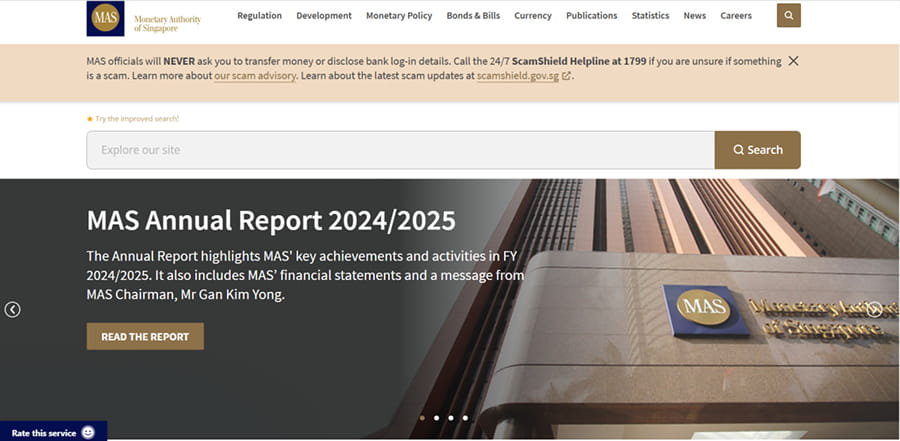
Another promising area is licensing for crypto businesses. Since 2020, regulation has been managed through the scalable MAS license framework, designed specifically for digital payment token (DPT) providers. Combined with strict compliance standards and the jurisdiction’s recognition by global players, this makes Singapore one of the most reliable entry points into the cryptocurrency market.
Logistics and trade — particularly cross-border operations — are also well served by incorporating in Singapore. Its location along Southeast Asia’s busiest maritime and air routes gives it a distinct edge over most regional competitors. On top of that, free trade agreements with more than 20 countries create a solid platform for expanding import and export activities.
For those planning to launch a startup, e-commerce, marketplaces, and platform-based models are worth considering. Government agencies actively finance the growth of digital commerce and encourage the international expansion of Singapore-based products. Thanks to the transparent legal framework and the possibility of running a company entirely online, foreign founders can scale safely without being physically present in the country.
Several segments currently show stable growth and are treated as priority industries:
High-demand areas for foreign founders:
- Financial technology and embedded finance
- Import/export operations with Asian goods
- Infrastructure and logistics (including warehouse leasing)
- Software development
- Crypto services and blockchain solutions
- E-commerce and B2B marketplaces
- ESG-driven sectors (green tech, sustainable investments)
- Medical and educational online platforms
- Consulting and legal services
- Cross-border trading
It is important to note that foreigners can register a company in almost any sector in Singapore, with only a few restrictions (such as defense, media, or gambling). However, licensing requirements vary depending on the business model and the degree of regulation in each field.
When planning a market entry strategy, investors should weigh not only commercial potential but also the level of administrative support. Programs such as grants and subsidies offered by EnterpriseSG significantly enhance the jurisdiction’s attractiveness. This is particularly relevant for innovative ventures and companies aiming at cross-border growth.
Choosing a Legal Form: Business Structures for Company Registration in Singapore
Before registering a company in Singapore, one of the most important steps is selecting the right organizational form. This choice defines how much liability owners take on, how the business is taxed, what licenses may be needed, and how banks or partners will treat the company. Foreigners are free to participate in nearly any structure, except where residency rules are explicitly required.
The Private Limited Company (Pte Ltd) is the most popular format, functioning like a limited liability company. It permits 100% foreign ownership, while shareholders’ liability is capped at their contributions. Incorporation requires one shareholder, one resident director, and a company secretary.
A Branch Office is suited to international groups that want to extend existing operations. Since it is not a separate entity, all liabilities rest with the parent company. A local representative must be appointed, but full commercial activity is allowed.
A Representative Office works only as a research or liaison unit. It has no legal status, cannot generate revenue, and serves mainly for market analysis and partner outreach.
|
Structure |
Legal Status |
Activity Allowed |
Liability |
|
Pte Ltd |
Legal entity |
Commercial |
Limited |
|
Branch Office |
Extension of the parent |
Commercial |
Unlimited (parent) |
|
Representative Office |
No legal standing |
Non-commercial, research |
Parent company |
All structures require an official Singapore address, disclosure of beneficial owners, and compliance with economic presence standards.
Most foreign investors prefer subsidiaries over branches, since subsidiaries enjoy separate tax treatment, local benefits, and the ability to contract as a Singapore company. Non-residents should secure a local director, often through accredited providers.
Through the Start-Up Tax Exemption scheme, new companies receive generous tax relief for their first three years, making incorporation in Singapore even more attractive for foreign founders.
Registering a Business in Singapore: The Practical Order of Steps
Singapore did not become a business hub by chance. The country codified the way companies are born and made the procedure available online to anyone, including foreigners who never set foot on its soil. The system works because it is detailed, and it works because it is enforced.
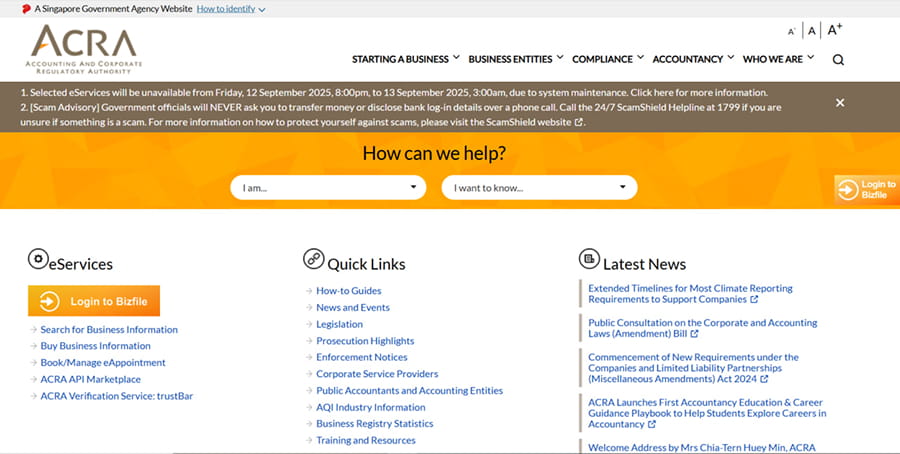
It starts with a name. Every application begins at ACRA, where officials check whether the proposed name collides with existing records or breaches restrictions. If the answer is yes, it is blocked. If the answer is no, the name is set aside for 120 days, and the applicant can move on.
Next comes the dossier. A file is built around the founder’s identity: personal documents if the applicant is an individual, corporate certificates if it is a company. Alongside this, the names of directors, shareholders, the company secretary, and the registered office address are listed.
Singapore law insists that one director must be resident. The role is not symbolic; this director anchors the company locally. The secretary is just as important: compliance work depends on them.
Then, transparency rules apply. Controllers — people with real power — must be disclosed. Their names are stored in a register, not open to the public but monitored by ACRA.
The moment of incorporation comes through the BizFile+ portal. Most cases are processed in one to three days. Once accepted, the entity receives a UEN, a number that becomes the key to every interaction with the state.
From here, official papers are issued. A certificate of incorporation. A set of constitutional rules, still called the Memorandum and Articles of Association. Banks will not open accounts without them; regulators will not issue licenses without them.
All of this is tied to the Companies Act and anti-money laundering standards. No filing is taken at face value — information is cross-checked, risks are assessed.
Depending on the sector, extra steps may appear. Trading firms often need GST registration at IRAS.
For simple structures, the entire story is over in less than five business days. For companies with non-resident directors, extra due diligence can stretch the timeline.
Foreign founders who avoid traveling usually appoint licensed service providers. These intermediaries handle the legal details and prevent errors that could undo the efficiency of the system.
Documents Required for Company Formation in Singapore: What Foreign Investors Need
When preparing to establish a business in Singapore, foreign applicants should understand that the documentation package differs depending on whether the founder is an individual or a corporate entity, as well as the jurisdiction of origin. Each incorporation involving non-residents is subject to enhanced requirements to ensure the authenticity and accuracy of information.
For individuals intending to incorporate, the standard package includes a passport, proof of residential address, and a completed personal profile form containing biographical details. Copies must be notarized, and in certain cases, legalization or an apostille under the Hague Convention is also required.
If the applicant is a corporate entity, additional materials must be supplied. These include the corporate profile, the company’s constitution, a board resolution authorizing the establishment of a Singapore subsidiary, and proof of the representative’s authority. This is routine when a holding structure is incorporated through a foreign vehicle.
Basic document set includes:
- Passport or ID of each shareholder/founder.
- Proof of residential address (issued within the last three months).
- Signed form with details of beneficial owners.
- Company constitution.
- Evidence of authority to act (where submitted by a representative).
Regulators in Singapore apply due diligence checks. Depending on the sector and ownership structure, they may request tax returns, bank letters, or property records. For corporate founders, ownership must be traced back to the ultimate beneficial owner. Translations into English with certified translators are often required.
Where trusts or foundations are involved, documents such as trust deeds, registry extracts, and details of trustees are required. Such cases are handled individually with legal support.
The purpose of these requirements is not to complicate access but to align with global financial reporting and transparency standards. Meeting them helps build credibility with banks and expedites the opening of corporate accounts once registration is complete.
Foreign applicants are strongly advised to check the current list of required papers and confirm authentication procedures in advance. Proper preparation reduces the risk of rejected applications or processing delays, especially in structures with multiple non-resident participants.
Although incorporation is digital via the BizFile+ platform, originals must be prepared and retained. They will be necessary for later steps such as banking, licensing, and registration with professional associations.
Banking in Singapore: Corporate Account Opening for Foreign-Owned Companies
Corporate banking is integral to operating in Singapore. After incorporation, companies are obliged to open an account, both for compliance purposes and to access global payment systems. For foreign investors, this stage often proves more demanding than registration itself, because banks apply extensive checks on ownership and capital.
Local banks — DBS, OCBC, UOB — dominate the market, while HSBC Singapore and Citibank offer international platforms. Choice is usually driven by transaction currencies, sector focus, and required digital tools.
Identity verification remains the first hurdle. Several banks still require the personal presence of a director. Others have adopted hybrid methods: certified documents combined with live video sessions. Remote onboarding is becoming more common, but it is never automatic.
The compliance process for non-residents is lengthy. Beyond basic documents, banks demand explanations of the business model, historical accounts (if any), and evidence of funding sources. Standard timelines are two to five weeks.
Expected documents:
- Incorporation details (UEN, Constitution).
- Registered address in Singapore.
- Shareholder and director IDs.
- Beneficial owner declarations.
- Evidence of the source of capital.
- Strategic business plan.
- CVs of managers or directors.
Complex ownership arrangements require expanded files: details of parent entities, affiliates, and cross-border relationships. English is mandatory, and notarization is often requested.
Singapore’s banks are technically advanced: clients gain multi-currency facilities, automated reporting, and API-based integration with corporate software. Role-based access ensures directors, accountants, and auditors operate separately.
The tightening of compliance rules affects all applicants, but most of all those active in cryptocurrency, high-risk finance, or cross-border commodities trade. Preparing a clear ownership narrative and traceable proof of funds is vital.
Opening a bank account is therefore less about paperwork and more about trust-building with the institution. For foreign investors, success lies in preparing a strong compliance package that demonstrates both transparency and sustainability of the business.
Business Licensing in Singapore: When a Permit Is Required
Even after a company has been incorporated and a corporate bank account has been opened, operations may still be impossible without securing the appropriate license. In Singapore, business licensing is an independent regulatory stage. It applies across a wide range of industries, particularly where consumer rights, financial stability, data protection, or public order are involved. For foreign-owned companies, understanding which licenses apply is just as important as incorporation itself.
The scope of licensing depends entirely on the type of activity. The main regulators include the Monetary Authority of Singapore (MAS), the Infocomm Media Development Authority (IMDA), the Urban Redevelopment Authority (URA), the Ministry of Health (MOH), and Enterprise Singapore. Applications are generally filed through the government platform GoBusiness Licensing, which allows businesses to filter by sector, company size, and the exact nature of the proposed activity.
Digital assets are one of the most closely watched topics. The Payment Services Act says that anybody who wants to start a cryptocurrency exchange, custody service, or token-related platform must get permission from MAS. There are three types of licenses in this licensing system: a basic license, a standard payment institution license, and a significant payment institution license. Applicants must create extensive compliance frameworks that include procedures for preventing money laundering (AML) and the hiring of a compliance officer whose job it is to keep an eye on finances.
Fintech operators fall under the same act. Providers of e-wallets, gateways, and transaction processing systems must demonstrate sufficient paid-up capital — between 100,000 SGD and 250,000 SGD (about USD 74,000–185,000), depending on expected transaction volume. For early-stage fintech companies, this requirement often shapes their funding and capitalization strategy from the outset.
Retail, logistics, and consumer services are subject to a different licensing map. For example, e-commerce companies must obtain specific approvals if they deal in regulated products such as pharmaceuticals, alcohol, tobacco, or electronics requiring certification. Food and beverage businesses are also tightly monitored: a license is mandatory whether the company operates a physical restaurant or an online delivery platform.
Education is another regulated area. Companies offering training courses or private programs must seek accreditation from the Committee for Private Education (CPE). The rule applies not only to traditional schools but also to online academies, particularly those providing professional or vocational programs. Ignoring this step may result in fines and the forced closure of the course.
Key industries where licensing is mandatory in Singapore include:
- Digital asset and cryptocurrency services.
- Payment systems, electronic wallets, and gateways.
- Financial advisory, lending, and credit facilities.
- Retail and wholesale trade in restricted goods.
- Education, training, and private courses.
- Healthcare, telemedicine, and pharmaceuticals.
- Telecommunications and broadcasting services.
- Food and beverage businesses, including delivery.
- Employment agencies and recruitment services.
- Travel agencies, insurance intermediaries, and related services.
It is important to emphasize that licensing takes place only after a company is incorporated and its bank account is operational. In many cases, the MAS and other regulators evaluate not just the paperwork but also the applicant’s reputation, operational readiness, and the sustainability of its business model. For certain activities, regulators may conduct interviews, review company websites, request commercial contracts, and verify the identities of all beneficial owners.
Physical presence can also be a condition. Some licenses require a local office or a resident director. Others demand evidence of real operations in Singapore, such as lease agreements, staff contracts, or signed service arrangements.
Timeframes vary widely: a straightforward retail license may be issued within a week, while fintech or crypto-related approvals can take two to three months. Applicants should always apply well in advance, as conducting business without the proper license carries significant penalties — from administrative fines and cancellation of the business registration to suspension of the company’s bank account.
For foreign founders, approaching licensing as a compliance exercise rather than a bureaucratic formality is essential. Each license confirms that the business is both legally valid and institutionally trusted. Careful preparation of documentation, early engagement with local advisors, and transparent disclosure of ownership and funding dramatically increase the chances of approval and protect the company’s reputation in Singapore’s highly regulated market.
Taxes in Singapore: How Companies Are Charged and Why It Attracts Founders
Ask why so many companies choose Singapore, and taxation always comes up. The rules are built around the territorial principle: Singapore taxes what happens on its soil, or what is brought back here, and leaves the rest untouched.
The official corporate tax rate is 17%, but hardly anyone pays that in practice. Relief schemes cut the bill dramatically.
For new businesses, the Start-Up Exemption grants:
- 75% relief on the first 100k SGD of profit.
- 50% relief on the next 100k.
That’s 125k SGD shielded in the first three years.
For everyone else, the Partial Exemption applies:
- 75% relief on the first 10k.
- 50% on the next 190k.
- Total: 102.5k SGD exempt.
In 2025, the government added temporary boosts: a 50% CIT rebate (capped at 40k SGD) and a 2k SGD cash grant.
Dividends are tax-free. Capital gains aren’t taxed either, unless trading becomes your main line of work.
From 2025, Singapore joined the global minimum tax drive. Big multinationals (>EUR 750m revenue) will face a top-up if their effective rate falls under 15%. Local SMEs won’t notice the change.
To push innovation, the Enterprise Innovation Scheme allows up to 400% tax deduction on R&D, IP, and training, or a cash payout up to 20k SGD annually.
Goods and Services Tax (GST) sits at 9%. Any business with a turnover above 1m SGD must register.
Internationally, Singapore protects investors through a web of 90+ Double Tax Agreements, covering most major economies.
Snapshot:
|
Tax |
Rate |
Note |
|
CIT |
17% |
Territorial |
|
Dividends |
0% |
Exempt |
|
Gains |
0% |
Exempt unless trading |
|
GST |
9% |
Over 1m turnover |
Every company must register with IRAS within 30 days of starting operations. Reporting is digital, but fines are heavy if deadlines are missed.
For foreign founders, the message is simple: taxes here are not low by accident — they are clear, predictable, and designed to give businesses room to plan. That certainty is why Singapore remains a magnet for global entrepreneurs.
Conclusion
Opening a company in Singapore is a strategic alignment with one of the most consistent and transparent business environments in the world. It is not simply an incorporation exercise but a signal to investors, partners, and regulators that the company is built on stable foundations. The jurisdiction’s regulatory clarity, effective protection of shareholder rights, and absence of excessive bureaucracy provide conditions in which both global and regional businesses can operate securely.
The jurisdiction’s appeal is measurable. Corporate taxation is kept at competitive levels, but supported by structured exemption regimes that reduce the effective burden. Capital can move across borders without restriction, licensing is handled through clear frameworks, and administrative processes are integrated into digital platforms. These features combine to make Singapore not just efficient but sustainable as a base for operations.
Foreign founders who want to avoid delays or compliance risks benefit from partnering with accredited service providers. Their role goes beyond filing: they assist in choosing the correct corporate form, navigating sector-specific licensing, and coordinating with banks that maintain strict due diligence. This structured approach reduces exposure to errors that can otherwise delay or even block market entry.
What follows incorporation is equally important. For many companies, Singapore is not the final destination but a platform for regional expansion. By registering here, firms access a jurisdiction that actively maintains regulatory stability, invests in infrastructure, and supports innovation. In this way, registration becomes an integral part of a longer-term corporate strategy: reducing fiscal pressure, safeguarding assets, and enabling growth not only in Singapore but across the Asia-Pacific region.
